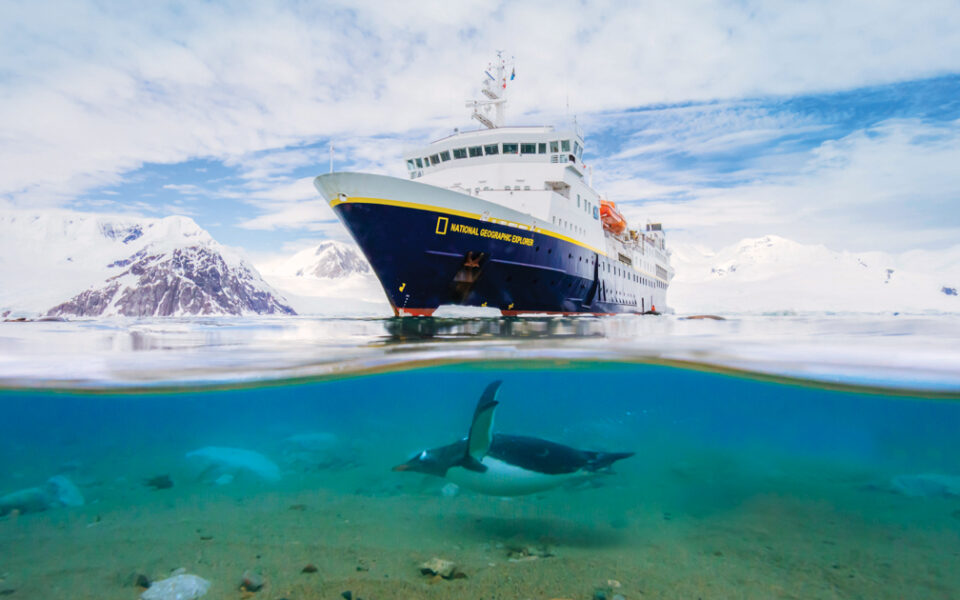
National Geographic Antarctica Direct
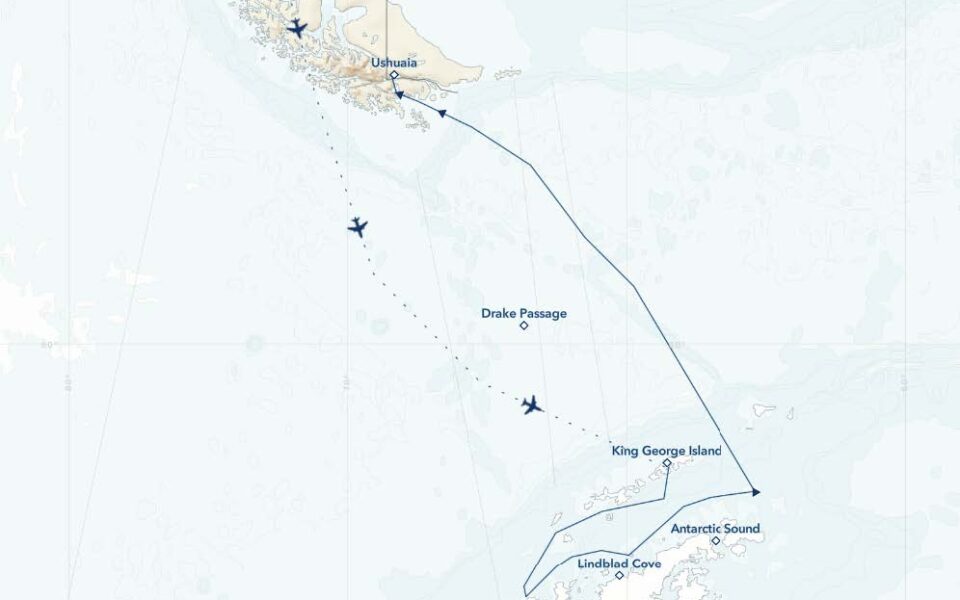
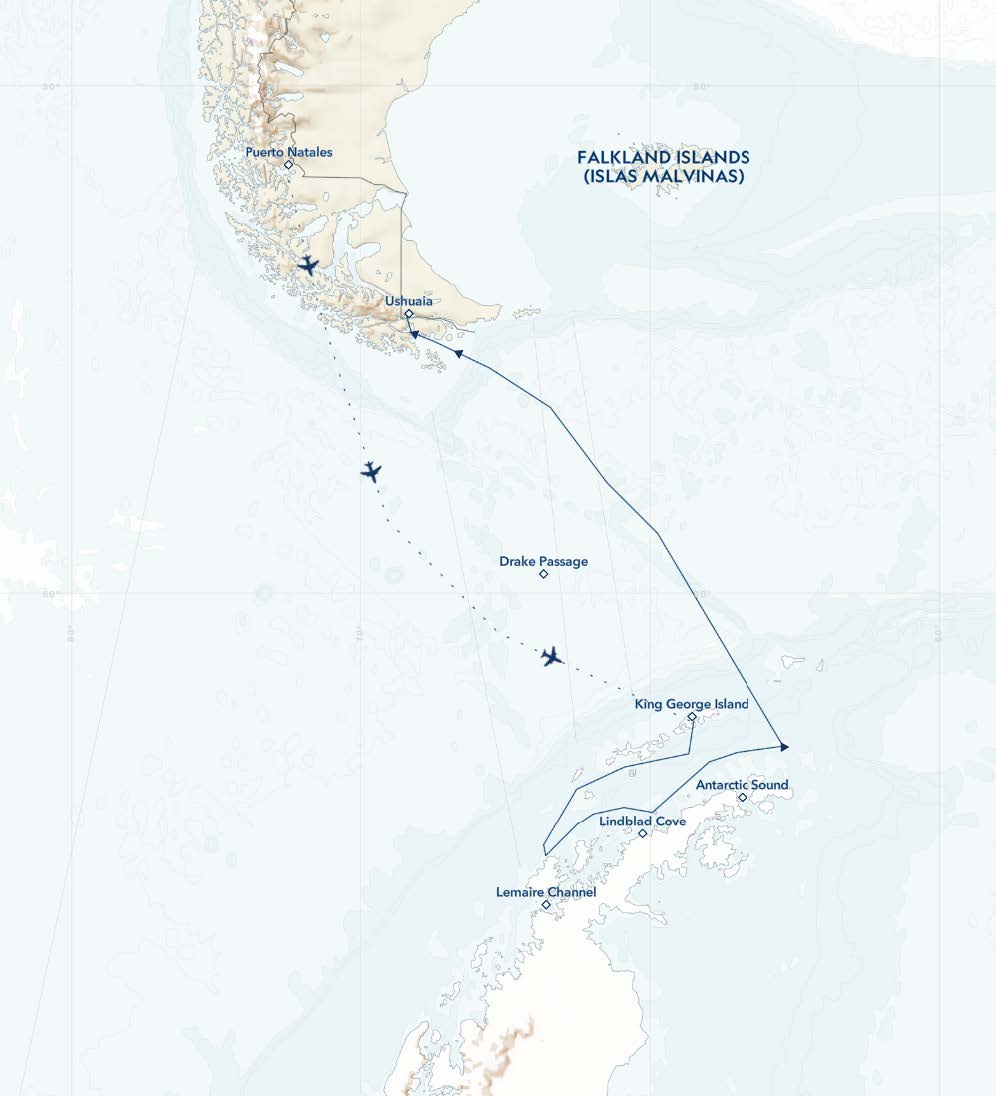
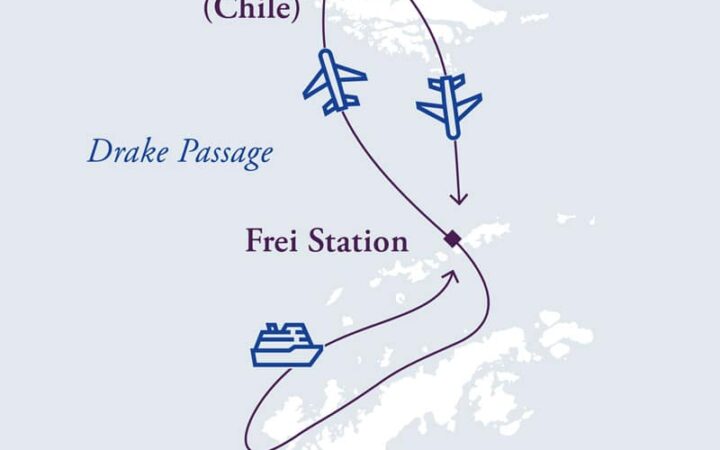
Aboard 102-guest Nat Geo Orion or 148-guest Nat Geo Explorer, experience Antarctica in a more efficient way. Fly over the Drake Passage in both directions or cruise it one way to discover all of the highlights without sacrificing extra time.
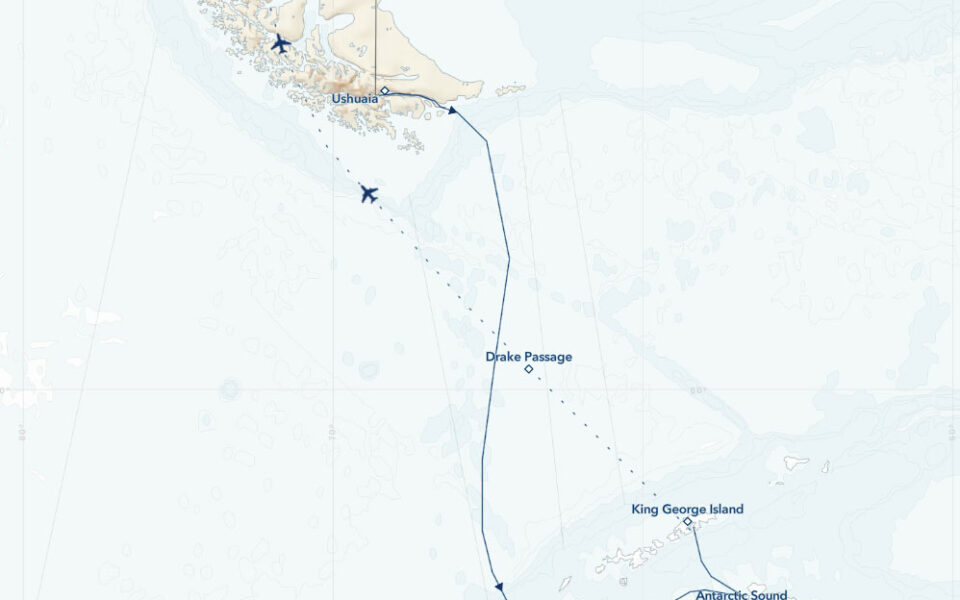
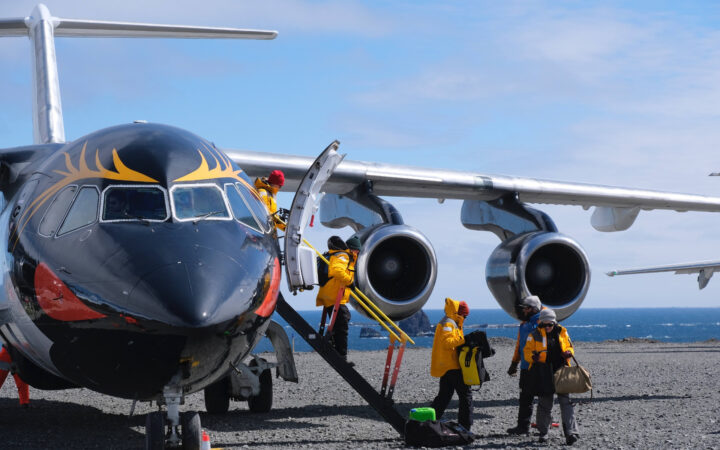
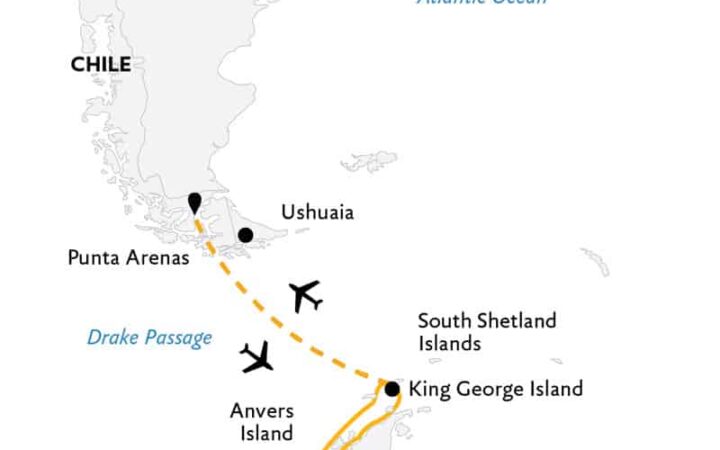
Experience the wild grandeur of the White Continent in a more efficient, expedient way, via a 2-hour flight between Antarctica and Chile. Fly over the Drake Passage in both directions, or cruise it one way, to discover all of the highlights without sacrificing the extra time.
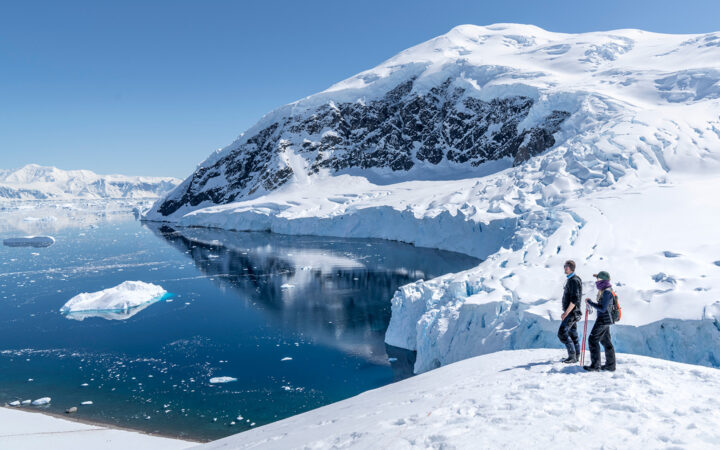
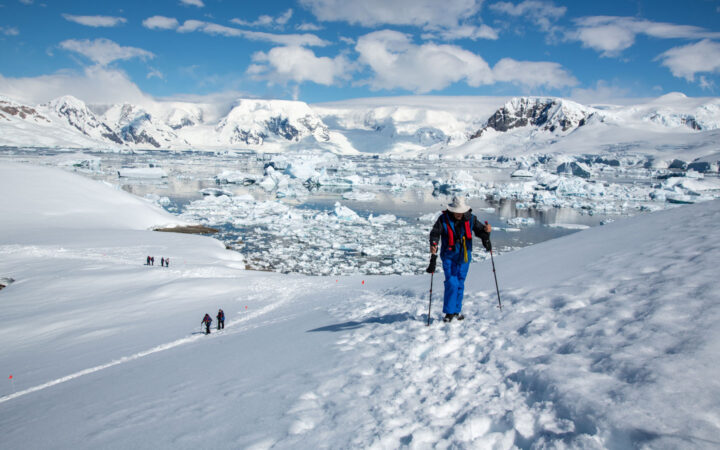
Tick off various bucket list items on this itinerary. Explore the world’s last great wilderness in the company of top naturalists and the most experienced polar captains in Antarctica, with more than 60 years of expedition heritage. Hike amid magnificent mountains; see huge glaciers; and observe a parade of gentoo, Adélie and chinstrap penguins. Kayak in protected waters, paddling in the Antarctic stillness as penguins swim nearby. kids and teens will learn about this exhilarating part of the world with the National Geographic Global Explorers family program.
Travel with a diverse team of experts aboard 102-guest National Geographic Orion or 148-guest National Geographic Explorer, each a definitive expedition ship. Venture into channels and coves framed by towering peaks. Watch for whales off the bow; Zodiac cruise around enormous icebergs; and hike, kayak, and even possibly cross-country ski in complete tranquility. Choose an active agenda or surrender to the pleasures of relaxing downtime and shipboard camaraderie. Plus, get top shots with the help of a National Geographic Photography Expert.
Read on for details about this trip, or learn more about AdventureSmith’s Antarctica cruises and trips to Antarctica, including even more ways to fly the Drake Passage.
Antarctica Direct: Fly the Drake Passage Itinerary
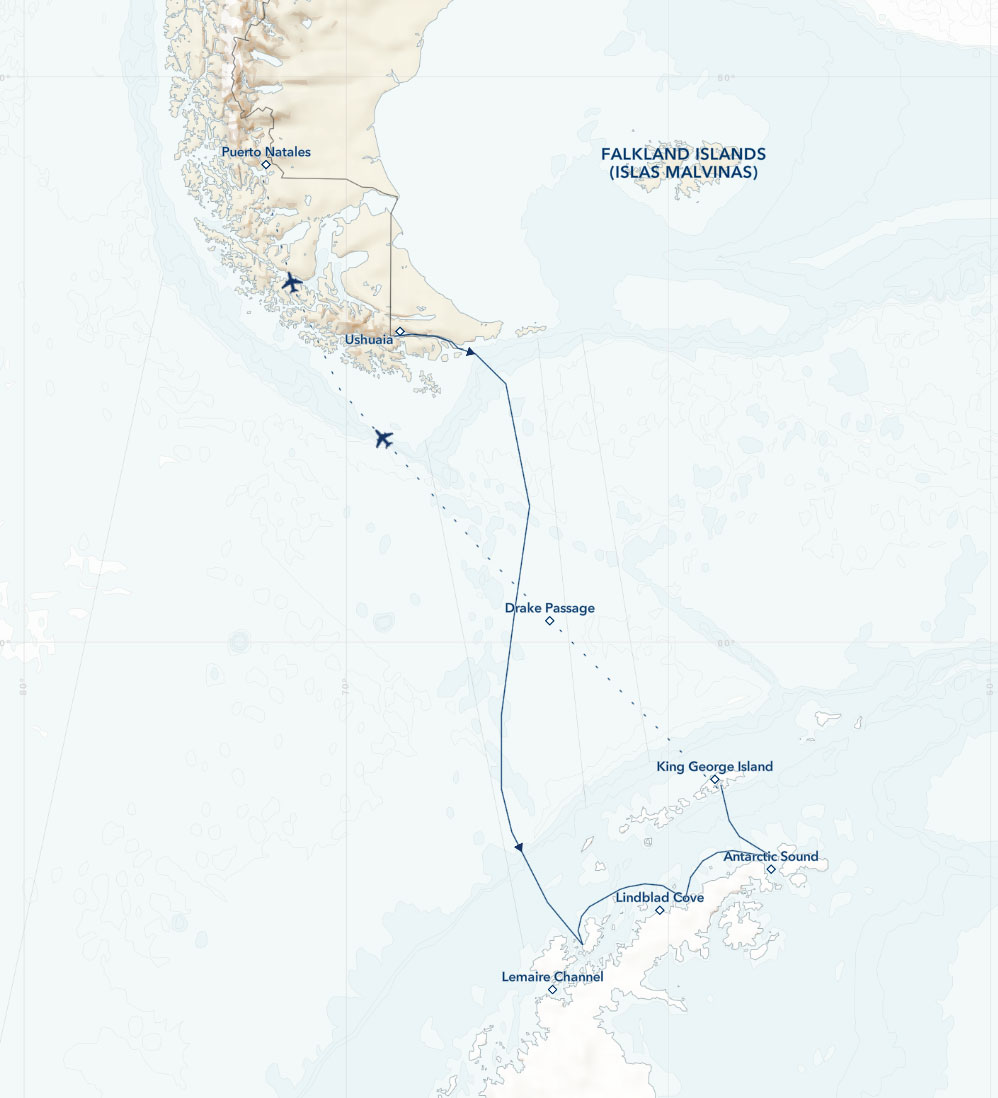
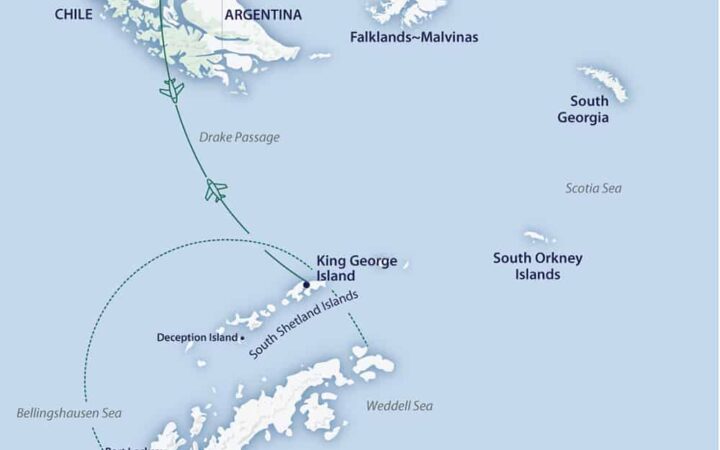
The 8-, 9- or 10-day Antarctica Direct: Fly the Drake Passage cruise operates round-trip from Puerto Natales, Chile, embarking and disembarking at King George Island with bookend charter flights.
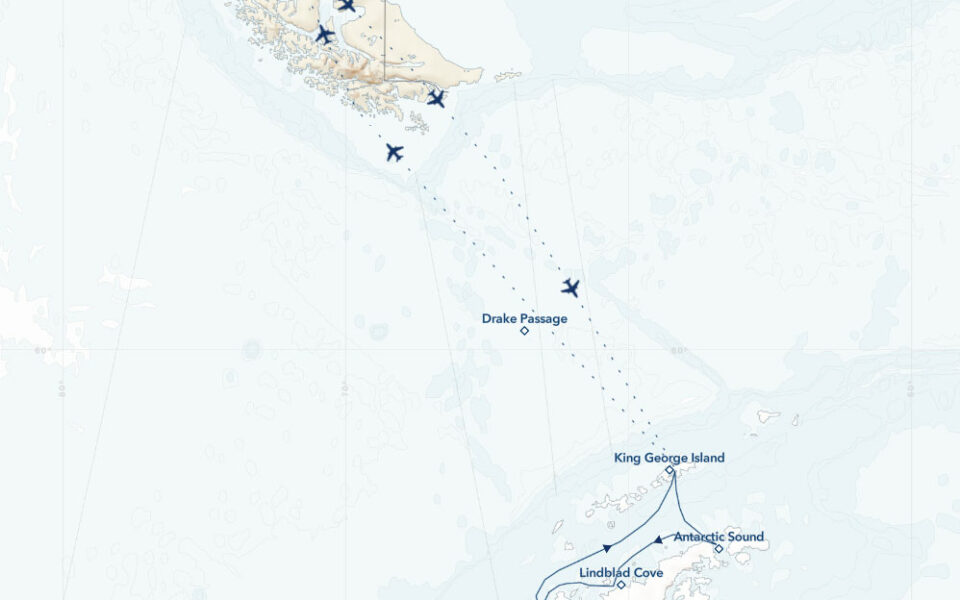
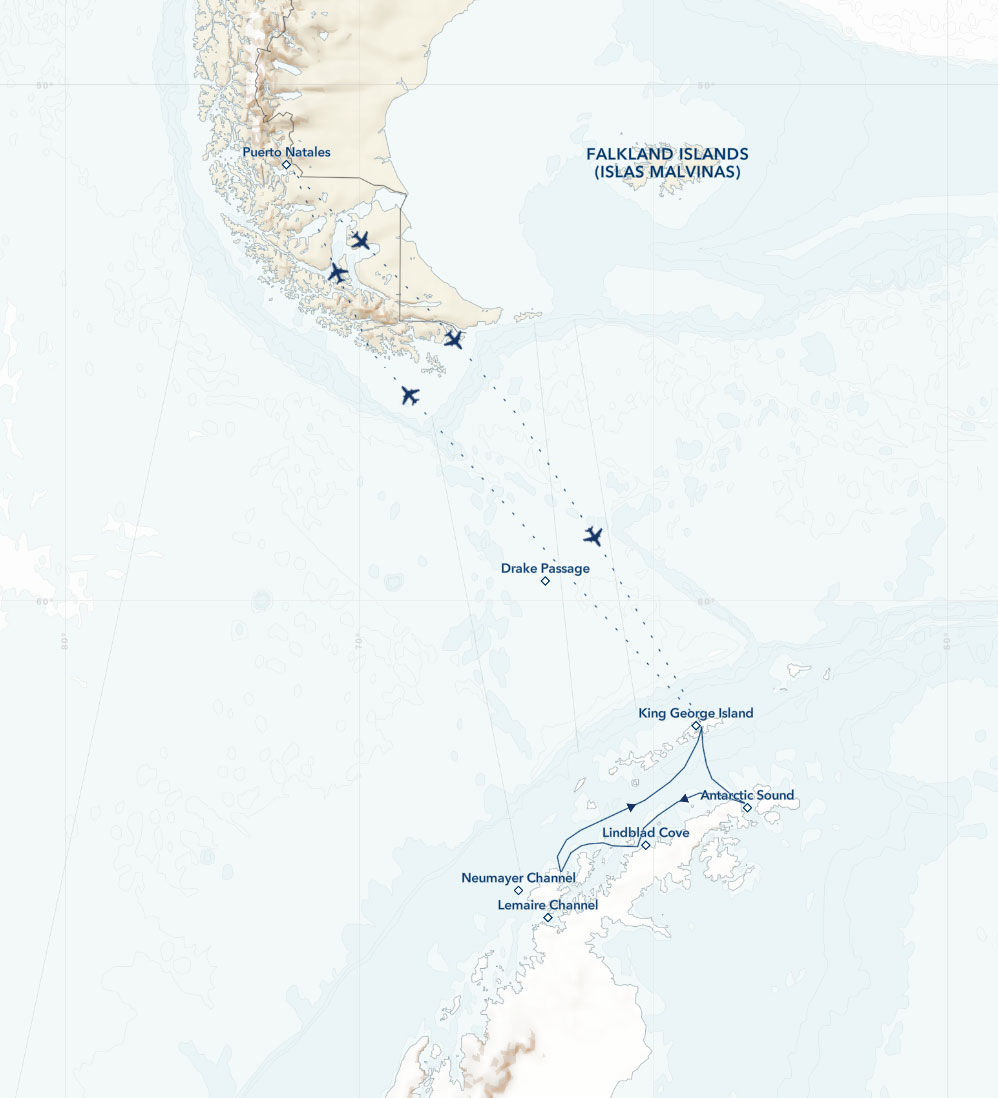
Arrive in Puerto Natales. Originally a small fishing port, the town is nestled on the Last Hope Sound and boasts a stunning view of the sea surrounded by the Cerro Benitez Mountains—the gateway to Torres del Paine. Transfer from the airport to the included group hotel. Join this evening for dinner and a briefing on the following day’s activities.
Following breakfast, check out of the hotel and transfer to the airport for your 2-hour direct flight to King George Island and the thrilling start to your Antarctic adventure. Home to a diverse assortment of wildlife—Weddell and elephant seals, Adelie, chinstrap and gentoo penguins—King George Island also has a human presence. Researchers from a wide range of countries, including the US, Chile, Argentina and Brazil, call the various stations home. Your flight will land at the Chilean research station where the ship will be waiting offshore. Board Zodiacs to embark the ship and set sail.
With long hours of daylight at this time of year, enjoy ample opportunities to explore. Your schedule is flexible to take advantage of the unexpected, whether you’re watching whales at play off the bow of the ship, hiking alongside penguin highways, or enjoying an evening Zodiac cruise amid porpoising penguins.
While wildlife is magnificent, ice defines the Antarctic. You’ll get to know ice up close and personal—from icebergs the size of islands, bergy bits and near-vertical glaciers, to the fragile, nearly invisible layers that have just begun to freeze. One day, you might set out by kayak to encounter towering icebergs at water level; embark on a Zodiac excursion in search of seals and blue-eyed shags; or walk amid thousands of Adélie and gentoo penguins. The next, you might experience the thrill of the ship crunching through pack ice.
Everywhere you go in Antarctica you’re surrounded by opportunities to capture uniquely beautiful images. Along the way your expert expedition team will enrich every experience.
This morning, the ship will be moored off of King George Island once again. Following disembarkation and Zodiac rides to shore, your flight departs the White Continent and returns to Puerto Natales where you overnight at the included group hotel.
Check out of your hotel and transfer to the airport to begin your journey homeward, or onward travel.
Included
Mandatory charter flights between Puerto Natales and King George Island; expedition parka to keep; all accommodations aboard ship or in hotels per itinerary; all meals as indicated in the itinerary, both aboard and onshore; beer, wine & full bar; excursions; services of expedition leaders, naturalist staff, expert guides and ship’s physician; use of kayaks; entrance fees; all port charges and service taxes; basic WiFi (enhanced and premium packages available for purchase). Gratuities for all departures of National Geographic Explorer, Orion, Endurance, Resolution, Sea Cloud, Jahan and Lord of the Glens.
Exclusions
Private transfers; immigration fees; air transportation; extensions; meals not indicated; reserve wines & super premium spirits; gratuities for all departures of Delfin II, Endeavour II, Islander II, Venture, Quest, Sea Bird and Sea Lion; personal items such as emails, laundry, voyage DVD, etc.; and insurance of any kind.
Payment & Cancellation
In order to confirm this trip, a deposit of 15% of the total trip cost is required per person at time of booking. The balance of the trip price is due 120 days before the departure date. Guests who must cancel their trip for any reason must do so in writing. Standard cancellations are subject to the following per-person fees, based on number of days prior to departure:
120 or more days – 100% of deposit**
119 to 90 days – 50% of total trip cost
89 to 0 days – 100% of total trip cost
**Advance payments will be credited in the form of a Lindblad Expeditions Travel Certificate, valid for 12 months from the date of cancellation, and which may only be applied towards final payment on any future booking.
Terms & Conditions
This trip is subject to AdventureSmith Explorations Terms and Conditions. Please read this information carefully and call us if you have any questions. A Traveler Information Form, which includes a release of liability, must be completed and signed by all travelers. Your Adventure Specialist will send you a unique link to complete this form along with a packing list and extensive pre-departure and travel insurance information upon booking confirmation.
Arrival & Departure
The National Geographic Antarctica Direct: Fly the Drake Passage cruise begins and ends in Puerto Natales, Chile (PNT). Plan flights to arrive to Puerto Natales in time to arrive at the hotel by 3:00pm on Day 1. Plan fights to depart Puerto Natales no earlier than 1:00pm on the final day. If you would like assistance with international flights, please visit our Booking Flights resource page.
Internal Flights
Group charter flights between Puerto Natales, Chile and King George Island are required on this trip’s itinerary; see this trip’s Exclusions. There is a strict luggage limit of one or two checked bags weighing up to 51 lbs (23 kg) combined, and one carry-on bag weighing up to 17 lbs (7 kg) plus a personal item that can be stowed under the seat.
Activities
Activities included aboard this expedition include Zodiac cruises, hiking and kayaking. Other activities may include yoga and stretching, land treks, glacier viewing and wildlife observation. Special to departures in November/December is the option of cross-country skiing, dependent upon snowpack conditions and weather at that time. See the Accommodations section for more information on what activities to expect aboard each vessel.
Room Configuration
In addition to listed Solo cabin rates, select double-occupancy cabins may be available for single occupancy with a single supplement fee. Third person rates are available in designated triple occupancy cabins on National Geographic Explorer at 1.5x the per-person listed rate in select cabins based upon availability. If you would like to share accommodations with another guest of the same gender, we will be happy to try to accommodate you in select cabin categories. This program allows you to pay the per person double-occupancy rate whether or not a roommate is found. Contact AdventureSmith for further details and availability.
Families & Children
Skilled staff members trained with National Geographic Education organize activities that inspire curiosity in young people of all ages. Programming for kids may include activities like photo workshops, journaling, scavenger hunts, Zodiac-driving lessons, hands-on nature and science programming and kid-friendly menu options. See the Deals section of this trip for any applicable child discounts.
Travel Insurance
Emergency medical evacuation insurance is recommended but not mandatory for this trip. Trip cancellation insurance is optional but also highly recommended. Our partners at Travelex Insurance offer a variety of plans and policies to fit every trip and budget. For best value and coverage for pre-existing medical conditions, consider purchasing a policy at time of booking. Learn more about travel insurance or get a free quote.
Itinerary Notes
Read this itinerary as a guide only; the exact route and program varies according to ice, weather conditions, wildlife encountered and the captain’s discretion. Flexibility is the key to the success of any Antarctica expedition. Visits to research stations depend on final permission.
Contingency Plan
In the unlikely event that the flight to Antarctica cannot take place on the scheduled day due to unfavorable weather conditions, a Contingency Plan, included in the cost of your expedition, will apply. The primary goal of the plan is to provide an engaging and comfortable travel experience while adapting to the weather. A change in the flight schedule can impact travel to Antarctica or the return back, and the plan includes a range of activities determined by the circumstances. Additionally, the Contingency Plan offers an opportunity to rebook should weather conditions prevent you from reaching Antarctica. Please read the full Contingency Plan and contact your Adventure Specialist for more details.
Loading rates & dates…
No upcoming departures available at this time.
No departures match your filters.
The National Geographic Explorer is a polar expedition vessel that holds 148 guests in 81 outside cabins. Her design and equipment is the result of almost 200 years of collective expedition experience. She is equipped with an ice-strengthened hull and advanced navigation equipment for polar expeditions and is perfectly maneuverable for polar passages while providing exceptional comfort. She carries kayaks and a fleet of Zodiac landing crafts. And an undersea specialist operates a remotely operated vehicle (ROV) and sophisticated video equipment, extending access to the underwater world.
Why Sail Aboard National Geographic Explorer
Choose the National Geographic Explorer if you are an active and inquisitive traveler seeking one of the finest ships combined with the best onboard experts from National Geographic. The expert guides and equipment on board this next-generation ship provide the finest intellectual and educational experience of any expedition cruise. If you are seeking an upscale expedition ship, with top guides synonymous with Nat Geo cruises, the National Geographic Explorer is the right expedition ship for you.
The National Geographic Explorer is one of the finest expedition ships in the world operating Antarctica cruises, Antarctica air cruise itineraries, Greenland cruises, Patagonia cruises, Arctic cruises, Iceland cruises, small ship cruises in Northern Europe and Canada small ship cruises. She is equipped for true expeditions to the farthest reaches of our planet in safety and comfort. At 148 guests and 367 feet, she is larger than many other expeditions ships but her size adds stability and endurance for longer voyages. She is still small enough to access remote locations favored by small ship expeditions.
Our experts have sailed aboard the National Geographic Explorer firsthand in Antarctica. AdventureSmith Explorations’ National Geographic Explorer review includes a detailed description of the small ship including deck plans and a photo gallery. Please read our National Geographic Explorer review below then contact our small cruise ship experts to compare the National Geographic Explorer with other Antarctica ships and polar expedition ships and yachts.
Common Areas & Amenities Aboard Nat Geo Explorer
Guests aboard the Explorer enjoy a Bistro Bar; forward-located Chart Room; restaurant; Global Gallery featuring practical items, regional handicrafts and art; library; lounge with full-service bar and state-of-the-art facilities for films, slideshows and presentations; mud room with lockers for expedition gear; and an observation lounge. An "Open Bridge" provides guests an opportunity to meet Explorer's officers and captain and learn about navigation.
A full-time doctor, Internet cafe and laundry are also available. The vessel is staffed by two Wellness Specialists and features a glass-enclosed Fitness Center, outdoor stretching area, two LEXSpa treatment rooms and Swedish sauna, perfect for quick warm-ups after polar plunges or as a relaxing way to end the day. The fitness center with its expansive floor-to-ceiling windows and 180-degree vista offers a “million-dollar view” along with exercise bikes, elliptical machines and treadmills, free weights, yoga mats and exercise balls. From early-morning yoga or stretching on deck or in the lounge to massages and face, hand or body treatments inspired by the location, the onboard wellness specialists help guests achieve a more relaxed and revitalized state of being, great for days spent at sea.
Nat Geo Explorer also offers internet access (one device at a time) via three tiers: time-limited complimentary "basic" internet, for app messaging, email and simple social media; time-limited "enhanced" internet, adding general web browsing and video conferencing capabilities; and "premium" internet, for unlimited access to all features under the "enhanced" plan. Please note: WiFi is satellite based and may be compromised by inclement weather or remote locations.
Activities Aboard National Geographic Explorer
National Geographic Explorer carries a full fleet of 15 Zodiac landing crafts, allowing guides to get the entire expedition community off ship and engaged in activities quickly, comfortably and safely. Widely regarded as the most robust watercraft available, these Zodiacs can push through pack ice and run up on sandy shores. Also on board are 36 two-person AIRE inflatable kayaks, a fleet large enough to ensure everyone who wants to can paddle at every opportunity. Specifically chosen because of their inherent stability and suitability for polar waters, AIREs are virtually untippable. Consequently, prior kayaking experience is not necessary; many guests aboard National Geographic Explorer have had their first kayaking experience in extraordinary locations. Kayakers are usually free to explore where they want within boundaries set by the undersea specialist and officer of the watch.
Unique in-ship Zodiac boarding stations, designed by VP-Marine Operations Captain Leif Skog, allow guests to step into Zodiacs and kayaks safely—and dry—from a secure platform inside the ship rather than a ladder dangling outside. With two possible embarkation gates, the Explorer unloads her guests into Zodiacs more quickly, meaning you’ll have more time ashore and less time waiting. Adjacent these boarding stations is the mudroom and lockers for guests, where expedition gear can be stored separate from cabins. On warm-weather itineraries where there will be snorkeling, a mask, snorkel, fins and wetsuit are provided for the duration of the expedition. On select cold-weather itineraries, cross-country ski gear may be available.
Additional tools for exploration aboard National Geographic Explorer include:
Underwater Camera
An undersea specialist will dive almost every day of Explorer’s expeditions, even in Antarctica or the Arctic, with almost 200 pounds of gear, to shoot high-definition, Cousteau-like footage of the deep. Colorful nudibranchs, plant-like crinoids and mysterious fish with antifreeze blood that thrive in the frigid sea will give you an entirely new appreciation of the marine environment.
Remotely Operated Vehicle
Capable of reaching 1,000 feet, far beyond the range of any scuba diver, the ROV allows guests to literally view parts of the undersea that are as unexplored as the moon. By sharing videos of potentially new species with scientists, such as a large worm an onboard specialist captured in the Weddell Sea, each expedition actively contributes to science and may fundamentally change how the ocean is viewed.
Video Microscope
Naturalists will use the video microscope to help explain all elements of the environment, including tiny organisms that are the building block of the marine ecosystem. Spellbinding images of a krill’s body, at 80x magnification, fills the plasma screens in the lounge with vivid detail, and fills every onlooker with a sense of wonder at the importance of an otherwise unobservable creature.
Crow’s Nest Camera
Perched high atop the vessel on the ship’s mast, this camera provides a continual view on the outside world that can be seen on in-room cabin TVs. From zooming in on a distant polar bear to simply watching the bow crush through ice flows, each guest gets a unique perspective of their surroundings. The extra height from the camera also aids the captain by allowing him to peer at ice conditions farther ahead.
Hydrophones
These underwater microphones are deployed to listen to the vocalizations of marine mammals. Real-time transmissions of their eerie, haunting sounds can be broadcast through the ship or recorded for later playback.
Dining Aboard National Geographic Explorer
Meals are served in the ship's elegant dining room and the adjacent, more intimate Bistro Bar. Seating is open, allowing you to choose where to dine, and table sizes range from 2 to 12. The style is relaxed and casual—there’s never a need to dress up, and there will be opportunities to chat with the onboard naturalists and guest speakers over a meal. Each evening, a ship’s officer, National Geographic staff or a naturalist hosts small tables in the chart room.
All food prepared aboard National Geographic Explorer is sourced locally whenever possible from sustainable providers, with special attention to all seafood being sustainably caught or raised. Breakfast is usually served buffet-style in the dining room and consists of a selection of fruit, eggs to order, cereal, yogurts, cheese and cold meats, plus specially prepared daily dishes, fresh coffee and tea. An early-riser continental breakfast is served in the bistro as well, and many guests choose to take their coffee and morning pastries to the bridge or out on deck. Lunch is also served buffet-style in the dining room and Bistro Bar, with salads and both hot and cold buffet choices available. Most days a light-lunch option is held in the observation lounge at the very top of the ship. When weather conditions permit, the light-lunch is held outdoors on the aft sundeck, offering a stunning backdrop. Depending on the day’s activities, an afternoon tea with cookies, or occasionally, cakes and pastries, is served buffet-style in the Bistro Bar. Dinners are served in the dining room and bistro and feature plated service.
Cabins & Deck Plan Aboard National Geographic Explorer
Soothingly decorated in quiet earth tones, National Geographic Explorer’s 81 spacious cabins each offer a large desk, ample drawer space, signature feather duvets, crisp cotton sheets and generously sized bathrooms with roomy glass-walled shower stalls, hair dryers, bathrobes and botanically-inspired shampoo, shower gel and lotion, as well as an Expedition Essential Kit. Most cabins offer a comfortable armchair for reading, as well as individual reading lamps above the bed.
Cabins also feature individual climate control for heating and air-conditioning; National Geographic Atlas; plenty of drawers, hooks and under-bed storage space for luggage; public address system; and a flat-panel TV with several channels for movies, National Geographic documentaries, lounge lectures and presentations, views from the Crow’s Nest camera and displays of the electronic chart system with the ship’s current position. Ethernet jacks are available for in-cabin Internet access and there are both 110-volt and 220-volt outlets. Cabin doors lock, but it’s recommended to leave jewelry and other valuables at home. The Explorer is not equipped with safety deposit boxes.
National Geographic Orion is a state-of-the-art expedition ship, designed to safely explore the remote regions of the planet. Orion carries 102 guests in 53 cabins, nine of them with balconies. She is equipped with a full complement of tools to explore the environment, including kayaks, Zodiacs, an ROV and the capacity to accommodate scuba divers. Her size and nimbleness offer the perfect combination of safety and the ability to go to the out-of-the-way islands and other places where large cruise ships cannot go.
National Geographic Orion Review
AdventureSmith Explorations’ National Geographic Orion review includes a detailed description of the small ship including deck plans and a photo gallery. Our experts have been aboard the Orion firsthand. Please read our National Geographic Orion review below then contact our experts to compare the National Geographic Orion with other with other small cruise ships, expedition ships offering Antarctica cruises, Greece small ship cruises, Mediterranean small ship cruises, Italy small ship cruises, Patagonia Cruises and Pacific Island cruises.
Designed and purpose-built in Germany in 2003 specifically for expedition travel, Orion is a modern, elegant ship with an intimate ambiance. In 2013, expedition cruise pioneers National Geographic-Lindblad Expeditions purchased Orion Expeditions and rechristened the Orion as the National Geographic Orion. The ship itself remained the same with new cabin categories and the added benefit of onboard experts from National Geographic. The National Geographic Orion has since maintained the high standards of quality and service that the vessel has always been known for, while adding a special focus on education. Food & Wine magazine sets sail with National Geographic Orion, curating an unforgettable culinary adventure at sea. Food & Wine magazine's wine experts have curated an extensive wine list featuring over 40 regional varietals, perfectly complementing the journey with nightly onboard tastings. Choose the National Geographic Orion if you are seeking an upscale exploration with outstanding service and programs.
Design & Technology Aboard National Geographic Orion
National Geographic Orion was created from the outset to explore the far corners of the Earth in complete self-sufficiency. Engineered for maximum comfort and safety, Orion is equipped with the latest technology including large retractable stabilizers, sonar, radar and an ice-strengthened hull. A shallow draft plus bow and stern thrusters provide the convenience of being able to maneuver close to shore. Ten Zodiacs ensure quick disembarkation and offer the ideal transport for up-close exploration. National Geographic Orion meets strict specifications for environmental protection and the onboard waste management systems meet the stringent polar operational standards enabling travel to the most pristine environments. A host of advanced design features and technology ensures sustainable marine environmental practices.
Common Areas Aboard National Geographic Orion
Orion's public rooms include a dramatic window-lined main lounge/cocktail bar and library, as well as an observation lounge perched at the very top of the ship. The spacious lounge is the heart of the vessel's expedition community, and is suited for spirited cocktail hours, informative presentations and the nightly tradition of Recap. In addition, a dedicated state-of-the-art theater with surround sound provides a unique setting for specialist presentations or films and slideshows.
While Orion interiors are elegant, life aboard is always casual, with no need for formal clothing. And you’ll find shipboard services like laundry, in-room cabled internet and public-area WiFi make packing and traveling more convenient. In addition there is an outdoor bar; a mud room; a glass elevator; a sundeck with padded chairs and a Jacuzzi spa; a gym with a step machine, treadmill, cross trainer, two bicycles, free weights and exercise mats; and a health spa with a unisex dry sauna.
In the library, a wide range of books run the gamut from fiction to regional guides and reference books on the wildlife and region you’re exploring, as well as board games and cards. A laptop with internet access is available. An onboard Wellness Program offers everything from early morning guided yoga to massages and body treatments.
Dining Aboard National Geographic Orion
Both the main dining room and outside buffet easily accommodate all guests at once for open seating dining. On selected nights, weather permitting, the dining room menu is also available on the outside deck.
After your day exploring, unwind in Orion's Galaxy or Leda Lounge. Share stories with fellow adventurers over a curated wine tasting, a classic cocktail, or a refreshing drink. Then, settle in for another evening of exquisite dining.
Seating is open, allowing you to choose where to dine, and table sizes range from 2 to 12. More than opportunities to eat well, mealtimes are also opportunities to engage in the diversity of the expedition community—to join or be joined by naturalists, guest speakers, ship’s officers and fellow guests for stimulating and entertaining conversation.
Breakfasts are designed to set you up for a day of physical and mental activity: hearty and healthy, with a seasonal selection of fruit and yogurts, freshly baked breads and pastries, cheeses, cold cuts, and freshly made omelets to order. An early riser continental breakfast is served as well, and many guests choose to take their coffee and morning pastries out on deck. Lunch is a favorite on-deck experience, perhaps accompanied by a beer or glass of wine, perfect for a more relaxed afternoon, and is usually served buffet-style on the outside deck (weather permitting), with salads and both hot and cold buffet choices available. Depending on the day’s activities, an afternoon tea with cookies, cakes or pastries, is served buffet-style in the lounge.
With the entire expedition team dedicated to delivering the best expedition possible, meal times are always flexible. If a pod of dolphins is sighted shortly before lunch, the crew is adept at quickly changing meal times so you don’t miss a moment, and the quality of lunch is uncompromised.
Activities Aboard National Geographic Orion
The National Geographic Orion is purpose-built for exploration, outfitted with kayaks, stand-up paddleboards and a fleet of Zodiacs. Additionally, this ship features a custom-designed swim and kayak launch platform, secured between two Zodiac boats, to create a stable base for swimmers and kayakers. Outside of polar regions, Nat Geo Orion's on-shore activities are limited to group sizes of 15 guests or less.
Crew & Guides Aboard National Geographic Orion
Accompanying every departure is an undersea specialist, a National Geographic-Lindblad-certified photography instructor, a National Geographic Photography Expert, a wellness specialist and a full-time medical professional.
Cabins & Deck Plan Aboard National Geographic Orion
All accommodations have external doors and most cabins feature oversized picture windows. Double occupancy cabins come in a variety of configurations. Soothingly decorated in elegant tones, National Geographic Orion’s spacious cabins all offer beds cossetted in duvets and crisp cotton sheeting; an armchair; reading lamps; generous desk space; Ethernet jacks for in-cabin Internet access; personal safe; mini-refrigerator; individual climate controls; ample room to hang parkas and plenty of drawers, hooks and under-bed storage space; a public address system; and a flat-screen TV with several channels for movies, documentaries, lounge presentations, the Crow's Nest camera and the ship's electronic chart system displaying the ship’s current position. Generously sized marble bathrooms feature a spacious shower stall with a glass door and are stocked with environmentally inspired bath products and shower gel, hair dryer, cotton towels and cozy white robes.
Current Deals on This Trip
Loading deal details…
Unable to load deal details. View full page →
Learn About the Small Ships on Your Itinerary
The National Geographic Explorer is a state-of-the-art expedition ship. She is fully stabilized, enabling her to navigate polar passages while providing comfort.
National Geographic Orion is one of the most sophisticated vessel in its class. Small ship cruises aboard the Orion offer a luxurious exploration of Antarctica, Patagonia, the Mediterranean and beyond.
Additional Travel Options Before or After Your Cruise
 Save up to 30%
+1
Save up to 30%
+1
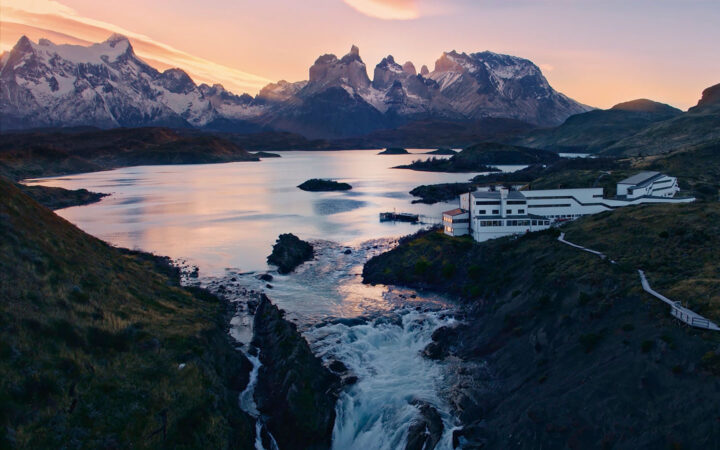
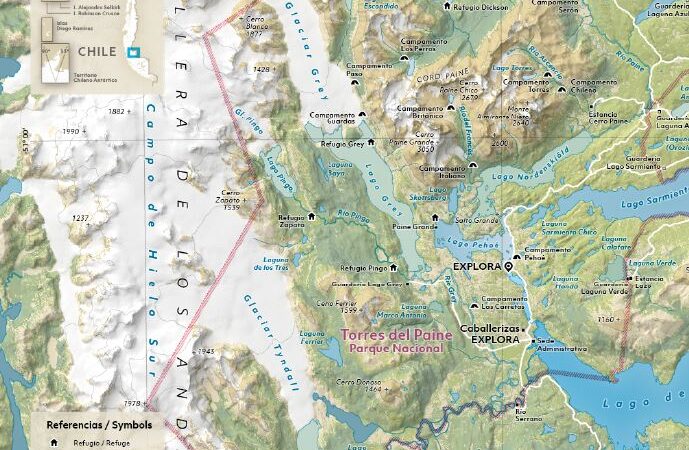
Explora Torres del Paine
Tailor-made adventure via a luxury Patagonia lodge
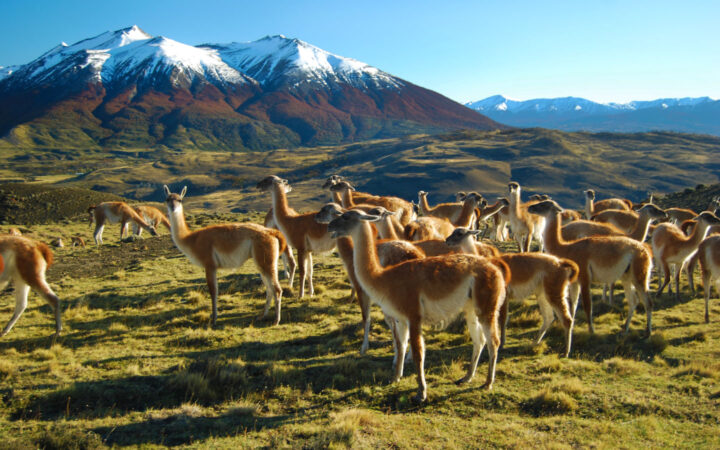
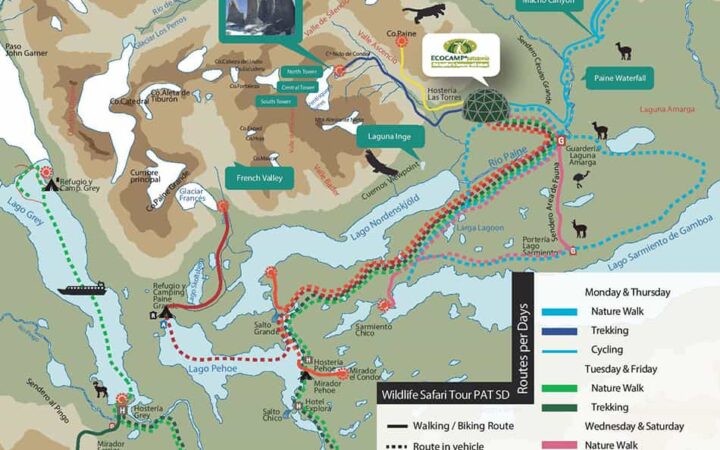
Patagonia Wildlife Safari
Choose your own adventure via smart-value, eco-friendly, geodesic domes
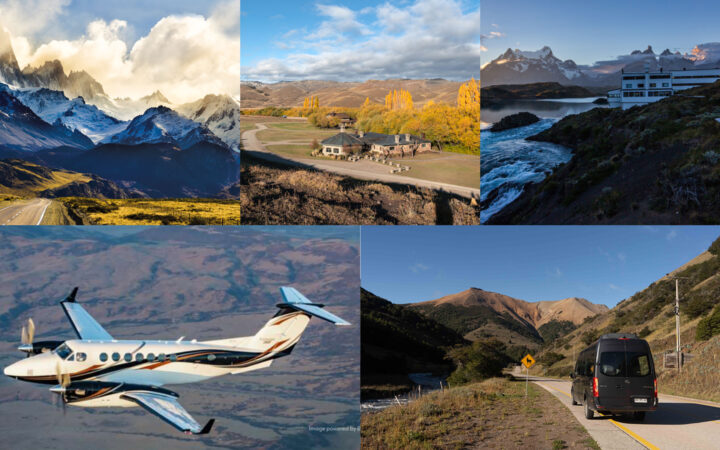
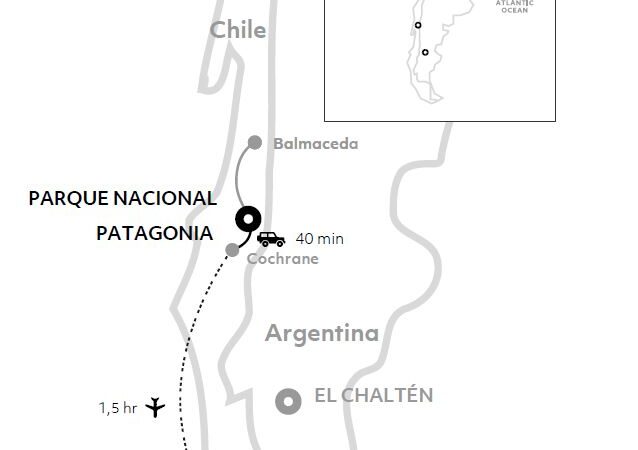
Explora Connects: Patagonia
Seamlessly link Patagonia’s top Explora lodges with choose & go activities
Inspiration & Education from Our Staff
View All Antarctica Travel Guides-
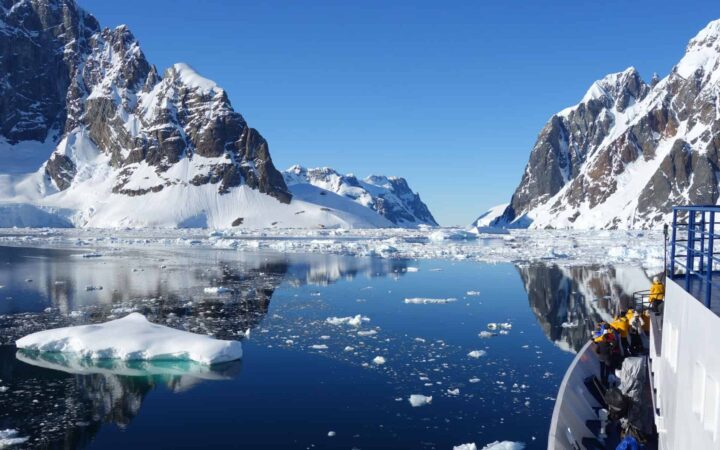
Best Time to Visit Antarctica
When is the best time to go to Antarctica? On the White Continent, the answer isn’t so black-and-white. Consult this month-by-month list covering everything from penguins to pack ice to help guide your travel timing.

-
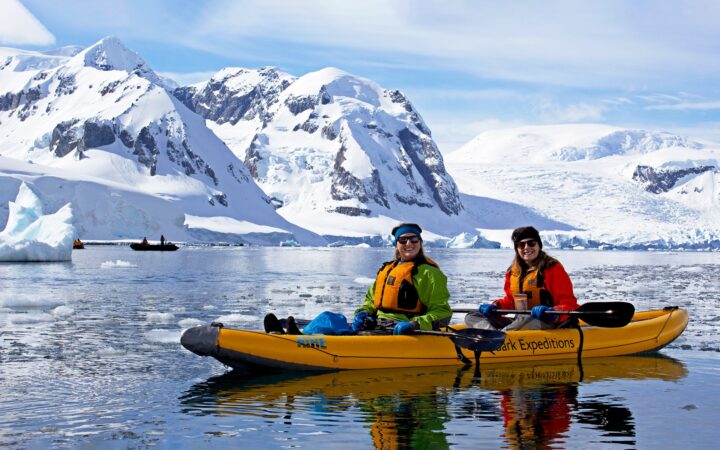
Things to Do in Antarctica
Learn about things to do in Antarctica, and how our experts can help you achieve your bucket list activities. Antarctica has so much to offer and our small ship cruise lines focus on experiencing the White Continent in an active, up-close way; here we explain how.

-
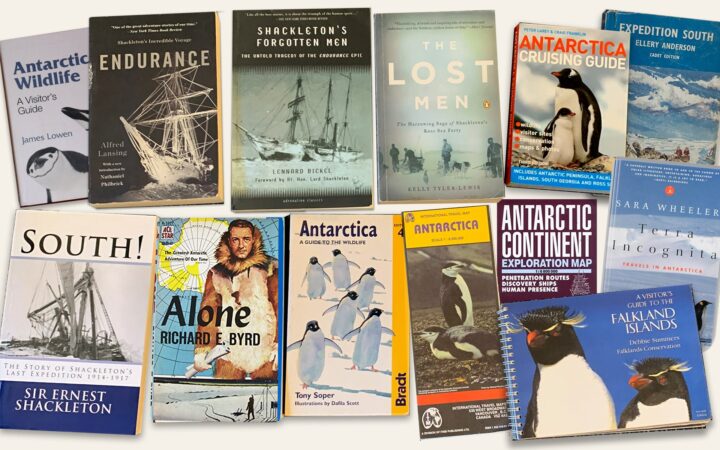
Antarctica Books & Travel Reading List
Our experts recommend their favorite Antarctica books on this comprehensive reading list. Prepare for travel with recommended books, field guides, travel guides, maps, & resources.

Trips You Might Also Like
View All Antarctica Air Cruises-
 Save up to $4,000
Antarctica Air Cruise
The original air-cruise with refined ships and logistics
-
 Save up to 30% + $3,500 air credit
Active & Wild Antarctica Air Cruise
An active fly-cruise built for high-energy explorers
-
 Save up to 15%
+1
Save up to 15%
+1
Antarctic Express: Fly the Drake
A time-smart Peninsula fly cruise with active options



Our experts will save you hours.
A single conversation with us is worth hours of internet scrolling. Find your next best trip with ease, then book with the confidence of our 20+ year experience.